
IBISWorld Platform
Answer any industry question in minutes with our entire database at your fingertips.

The French telecommunications industry has seen significant evolution over the past decade, marked by substantial advancements in fibre optic technology and changes in consumer behaviour. Fibre optics have been pivotal, offering higher speeds and better reliability than copper networks, essential for supporting advanced digital services and technologies like 5G and IoT. Major players, including Orange, SFR, Bouygues Telecom and Free, have spearheaded the expansion of fibre networks under the France Très Haut Débit plan. However, traditional fixed-line telephony and cable TV have declined due to competition from mobile and internet-based services, prompting providers to adapt to bundled offerings. Over the five years through 2025, Wired Telecommunication Services’ revenue is expected to climb at a compound annual rate of 1.1 % to €43.6 billion, with revenue expected to swell by 0.2 % in 2025.In mid-2024, France's telecommunications sector reached a crucial milestone, with fibre optic coverage becoming available to 89% of households in metropolitan areas , according to Arcep. Despite this achievement, the challenge remains to connect the remaining 5.1 million households, particularly in less densely populated regions like Dordogne and Ardèche. Intense competition from MVNOs and OTT content providers is reshaping the market, pressuring traditional services as consumers seek flexible, cost-effective communication and entertainment options. Telecom operators are responding by diversifying their bundled service packages and integrating telephony, internet and TV services to maintain and grow their customer base amid this evolving landscape.Over the five years through 2030, revenue is expected to swell at a compound annual rate of 1.2% to €46.3 billion. Going forward, France’s telecommunications industry must adapt to the changing preferences of younger consumers who favour innovative and flexible services. The ongoing growth in wireless technologies, VoIP and OTT services presents both challenges and opportunities. Telecom companies may need to expand their offerings to include personalised digital solutions that cater to the tech-savvy consumer's lifestyle. To remain competitive, wired telecommunication services providers will likely focus on tailored solutions for enterprise clients, leveraging fibre optic technology to support industries like healthcare and manufacturing with superfast internet access.
Answer any industry question in minutes with our entire database at your fingertips.
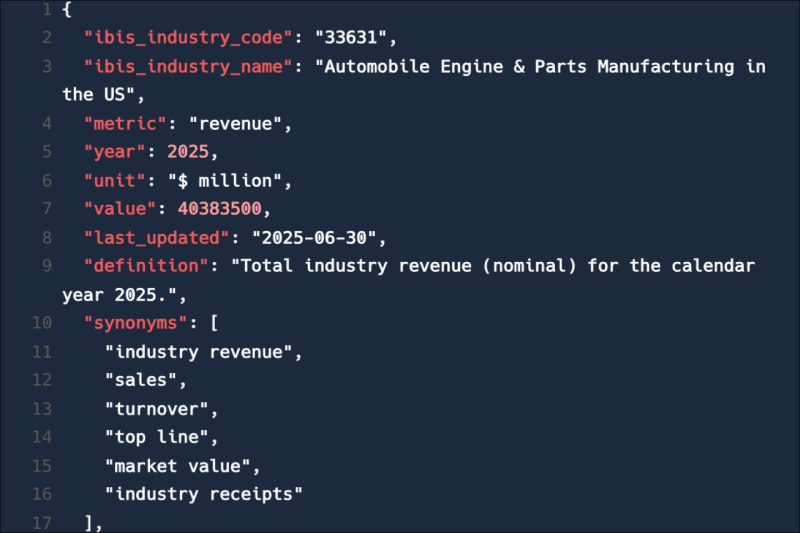
Feed trusted, human-driven industry intelligence straight into your platform.
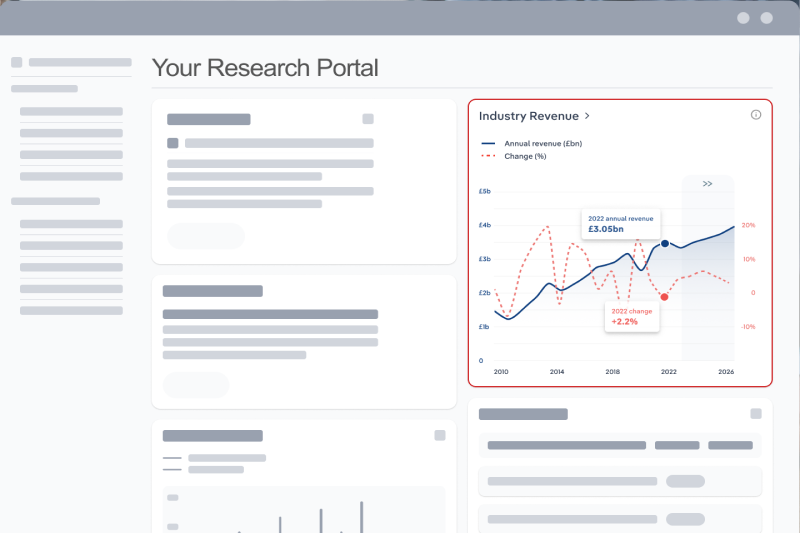
Streamline your workflow with IBISWorld’s intelligence built into your toolkit.
IBISWorld's research coverage on the Wired Telecommunications Services industry in France includes market sizing, forecasting, data and analysis from 2015-2030. The most recent publication was released June 2025.
The Wired Telecommunications Services industry in France operates under the industry code FR-J611. Market players provide access to the transmission of voice, data, text, sound and images by means of wired infrastructure and operate cable transmission networks. This industry also includes purchasing access and network capacity from owners and operators of networks and providing telecommunications services using this capacity to businesses and households. Wireless communication service providers and Internet service providers are not part of this industry. Related terms covered in the Wired Telecommunications Services industry in France include local loop unbundling (llu), mvnos (mobile virtual network operators), ott (over-the-top), digital subscriber line (dsl), fibre to the building (fttb) and fibre to the home (ftth).
Products and services covered in Wired Telecommunications Services industry in France include Fixed-Line Telephony Service, Fixed Broadband Services and Cable Television Services.
Companies covered in the Wired Telecommunications Services industry in France include Orange SA, Altice France Holding SA and Iliad S.A.
The Performance chapter covers detailed analysis, datasets, detailed current performance, sources of volatility and an outlook with forecasts for the Wired Telecommunications Services industry in France.
Questions answered in this chapter include what's driving current industry performance, what influences industry volatility, how do successful businesses overcome volatility, what's driving the industry outlook. This analysis is supported with data and statistics on industry revenues, costs, profits, businesses and employees.
The Products and Markets chapter covers detailed products and service segmentation and analysis of major markets for the for the Wired Telecommunications Services industry in France.
Questions answered in this chapter include how are the industry's products and services performing, what are innovations in industry products and services, what products or services do successful businesses offer and what's influencing demand from the industry's markets. This includes data and statistics on industry revenues by product and service segmentation and major markets.
The Geographic Breakdown chapter covers detailed analysis and datasets on regional performance of the Wired Telecommunications Services industry in France.
Questions answered in this chapter include where are industry businesses located and how do businesses use location to their advantage. This includes data and statistics on industry revenues by location.
The Competitive Forces chapter covers the concentration, barriers to entry and supplier and buyer profiles in the Wired Telecommunications Services industry in France. This includes data and statistics on industry market share concentration, barriers to entry, substitute products and buyer & supplier power.
Questions answered in this chapter include what impacts the industry's market share concentration, how do successful businesses handle concentration, what challenges do potential industry entrants face, how can potential entrants overcome barriers to entry, what are substitutes for industry services, how do successful businesses compete with substitutes and what power do buyers and suppliers have over the industry and how do successful businesses manage buyer & supplier power.
The Companies chapter covers Key Takeaways, Market Share and Companies in the Wired Telecommunications Services industry in France. This includes data and analysis on companies operating in the industry that hold a market share greater than 5%.
Questions answered in this chapter include what companies have a meaningful market share and how each company is performing.
The External Environment chapter covers Key Takeaways, External Drivers, Regulation & Policy and Assistance in the Wired Telecommunications Services industry in France. This includes data and statistics on factors impacting industry revenue such as economic indicators, regulation, policy and assistance programs.
Questions answered in this chapter include what demographic and macroeconomic factors impact the industry, what regulations impact the industry, what assistance is available to this industry.
The Financial Benchmarks chapter covers Key Takeaways, Cost Structure, Financial Ratios, Valuation Multiples and Key Ratios in the Wired Telecommunications Services industry in France. This includes financial data and statistics on industry performance including key cost inputs, profitability, key financial ratios and enterprise value multiples.
Questions answered in this chapter include what trends impact industry costs and how financial ratios have changed overtime.
The Industry Data chapter includes 10 years of historical data with 5 years of forecast data covering statistics like revenue, industry value add, establishments, enterprises, employment and wages in the Wired Telecommunications Services industry in France.
More than 6,000 businesses use IBISWorld to shape local and global economies
We were able to supplement our reports with IBISWorld’s information from both a qualitative and quantitative standpoint. All of our reporting now features some level of IBISWorld integration.

IBISWorld delivers the crisp business knowledge we need to drive our business. Whether it be serving up our major clients, winning new business or educating on industry issues, IBISWorld brings real value.

IBISWorld has revolutionised business information — which has proved commercially invaluable to exporters, investors and public policy professionals in Australia and overseas.

When you’re able to speak to clients and be knowledgeable about what they do and the state that they operate in, they’re going to trust you a lot more.

The market size of the Wired Telecommunications Services industry in France is €43.6bn in 2026.
There are 1,419 businesses in the Wired Telecommunications Services industry in France, which has grown at a CAGR of 6.0 % between 2020 and 2025.
The market size of the Wired Telecommunications Services industry in France has been growing at a CAGR of 1.1 % between 2020 and 2025.
Over the next five years, the Wired Telecommunications Services industry in France is expected to grow.
The biggest companies operating in the Wired Telecommunications Services industry in France are Orange SA, Altice France Holding SA and Iliad S.A.
Fixed-Line Telephony Service and Fixed Broadband Services are part of the Wired Telecommunications Services industry in France.
The company holding the most market share in the Wired Telecommunications Services industry in France is Orange SA.
The level of competition is high and increasing in the Wired Telecommunications Services industry in France.