
IBISWorld Platform
Answer any industry question in minutes with our entire database at your fingertips.

The German labour market is currently affected by a significant decline in job vacancies, caused by economic uncertainty and weakening international demand. Sectors such as transport, construction and business-related services are particularly in focus. In light of these challenges, recruitment agencies are being forced to rethink and adapt their recruitment strategies in order to continue to efficiently identify suitable candidates for the few available positions. Creative approaches and the strategic expansion of networks are crucial in order to survive in a dynamic competitive environment and to fulfil the increased expectations of clients under tight economic conditions. On average, sales have increased by 6% per year over the past five years. The profit margin of companies in the sector remains at an extremely high level. In the past five years, efficiency gains have been achieved through the use of social networks such as Xing and LinkedIn.In 2025, turnover is expected to increase by 1.3% to 8.4 billion euros. At present, recruitment agencies are increasingly focussing on combating the shortage of skilled workers in key economic sectors such as healthcare, IT and construction. Despite economic volatility, the demand for qualified specialists remains high, further underpinning the agencies' role as indispensable partners for companies. In order to fulfil the specific requirements of clients, agencies must increasingly rely on innovative strategies such as active sourcing and the growing use of AI technologies. In addition, an intensification of new client acquisition and the progressive digitalisation of application processes will be unavoidable in order to be able to react in an agile manner to the dynamically developing market requirements. IBISWorld expects the industry's turnover to grow by an average of 1.8% per year over the next five years, which should generate 9.1 billion euros by 2030. Looking to the future, recruitment agencies must invest more in further training and retraining measures in order to effectively meet the challenges of the skills shortage. Targeted cooperation with educational institutions makes it possible to systematically develop urgently needed expertise in sought-after areas. At the same time, the expansion of international networks remains essential in order to facilitate access to global talent and integrate it efficiently into the German labour market. The increased use of AI-based tools for process optimisation represents a further decisive step towards increasing the performance of recruitment agencies and securing their competitiveness and future viability in the long term.
Answer any industry question in minutes with our entire database at your fingertips.
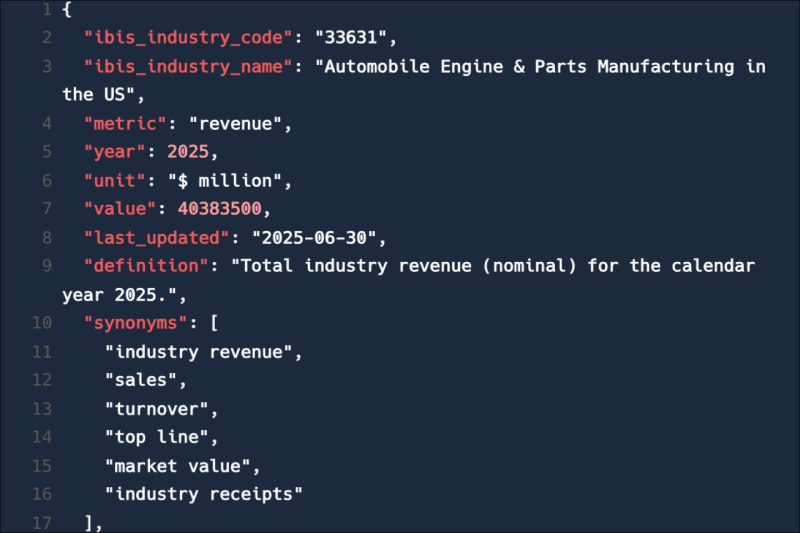
Feed trusted, human-driven industry intelligence straight into your platform.
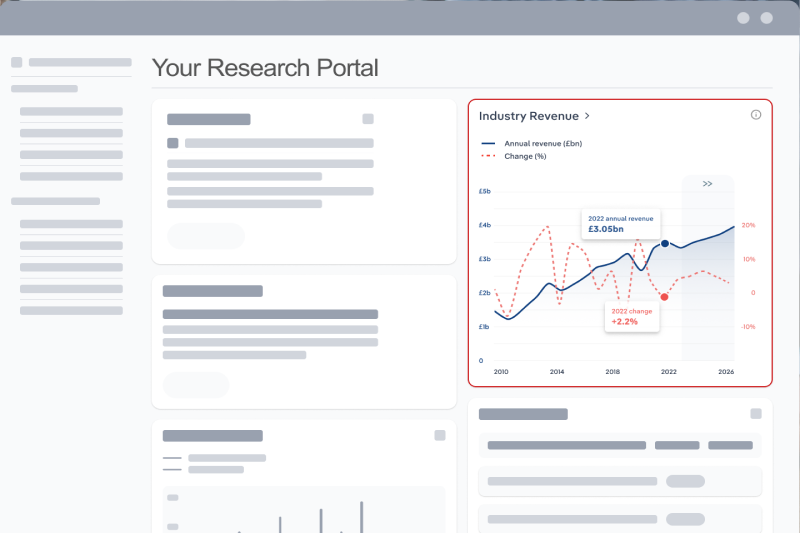
Streamline your workflow with IBISWorld’s intelligence built into your toolkit.
IBISWorld's research coverage on the Employment Placement Agencies industry in Germany includes market sizing, forecasting, data and analysis from 2016-2031. The most recent publication was released February 2026.
The Employment Placement Agencies industry in Germany operates under the WZ industry code N78.10DE. Recruitment agencies create and place job vacancies and place applicants with companies. A key characteristic of the industry is that the people placed are not employed by the placement companies. Agencies for the placement of artists are not part of the industry, nor are agencies for the placement of temporary workers. Related terms covered in the Employment Placement Agencies industry in Germany include cv-parser, executive search, hotdesking, jobsharing, recruiter/headhunter and remote work.
Products and services covered in Employment Placement Agencies industry in Germany include Placement of employees for upper management, Placement of employees for middle management and Placement of specialists.
Companies covered in the Employment Placement Agencies industry in Germany include ManpowerGroup Deutschland Verwaltungs GmbH, Egon Zehnder International GmbH and Hays AG.
The Performance chapter covers detailed analysis, datasets, detailed current performance, sources of volatility and an outlook with forecasts for the Employment Placement Agencies industry in Germany.
Questions answered in this chapter include what's driving current industry performance, what influences industry volatility, how do successful businesses overcome volatility, what's driving the industry outlook. This analysis is supported with data and statistics on industry revenues, costs, profits, businesses and employees.
The Products and Markets chapter covers detailed products and service segmentation and analysis of major markets for the for the Employment Placement Agencies industry in Germany.
Questions answered in this chapter include how are the industry's products and services performing, what are innovations in industry products and services, what products or services do successful businesses offer and what's influencing demand from the industry's markets. This includes data and statistics on industry revenues by product and service segmentation and major markets.
The Geographic Breakdown chapter covers detailed analysis and datasets on regional performance of the Employment Placement Agencies industry in Germany.
Questions answered in this chapter include where are industry businesses located and how do businesses use location to their advantage. This includes data and statistics on industry revenues by location.
The Competitive Forces chapter covers the concentration, barriers to entry and supplier and buyer profiles in the Employment Placement Agencies industry in Germany. This includes data and statistics on industry market share concentration, barriers to entry, substitute products and buyer & supplier power.
Questions answered in this chapter include what impacts the industry's market share concentration, how do successful businesses handle concentration, what challenges do potential industry entrants face, how can potential entrants overcome barriers to entry, what are substitutes for industry services, how do successful businesses compete with substitutes and what power do buyers and suppliers have over the industry and how do successful businesses manage buyer & supplier power.
The Companies chapter covers Key Takeaways, Market Share and Companies in the Employment Placement Agencies industry in Germany. This includes data and analysis on companies operating in the industry that hold a market share greater than 5%.
Questions answered in this chapter include what companies have a meaningful market share and how each company is performing.
The External Environment chapter covers Key Takeaways, External Drivers, Regulation & Policy and Assistance in the Employment Placement Agencies industry in Germany. This includes data and statistics on factors impacting industry revenue such as economic indicators, regulation, policy and assistance programs.
Questions answered in this chapter include what demographic and macroeconomic factors impact the industry, what regulations impact the industry, what assistance is available to this industry.
The Financial Benchmarks chapter covers Key Takeaways, Cost Structure, Financial Ratios, Valuation Multiples and Key Ratios in the Employment Placement Agencies industry in Germany. This includes financial data and statistics on industry performance including key cost inputs, profitability, key financial ratios and enterprise value multiples.
Questions answered in this chapter include what trends impact industry costs and how financial ratios have changed overtime.
The Industry Data chapter includes 10 years of historical data with 5 years of forecast data covering statistics like revenue, industry value add, establishments, enterprises, employment and wages in the Employment Placement Agencies industry in Germany.
More than 6,000 businesses use IBISWorld to shape local and global economies
We were able to supplement our reports with IBISWorld’s information from both a qualitative and quantitative standpoint. All of our reporting now features some level of IBISWorld integration.

IBISWorld delivers the crisp business knowledge we need to drive our business. Whether it be serving up our major clients, winning new business or educating on industry issues, IBISWorld brings real value.

IBISWorld has revolutionised business information — which has proved commercially invaluable to exporters, investors and public policy professionals in Australia and overseas.

When you’re able to speak to clients and be knowledgeable about what they do and the state that they operate in, they’re going to trust you a lot more.

The market size of the Employment Placement Agencies industry in Germany is €4.9bn in 2026.
There are 4,495 businesses in the Employment Placement Agencies industry in Germany, which has grown at a CAGR of 2.0 % between 2021 and 2026.
The Employment Placement Agencies industry in Germany is unlikely to be materially impacted by import tariffs with imports accounting for a low share of industry revenue.
The Employment Placement Agencies industry in Germany is unlikely to be materially impacted by export tariffs with exports accounting for a low share of industry revenue.
The market size of the Employment Placement Agencies industry in Germany has been growing at a CAGR of 0.2 % between 2021 and 2026.
Over the next five years, the Employment Placement Agencies industry in Germany is expected to grow.
The biggest companies operating in the Employment Placement Agencies industry in Germany are ManpowerGroup Deutschland Verwaltungs GmbH, Egon Zehnder International GmbH and Hays AG
Placement of employees for upper management and Placement of employees for middle management are part of the Employment Placement Agencies industry in Germany.
The company holding the most market share in the Employment Placement Agencies industry in Germany is ManpowerGroup Deutschland Verwaltungs GmbH.
The level of competition is high and increasing in the Employment Placement Agencies industry in Germany.