
IBISWorld Platform
Answer any industry question in minutes with our entire database at your fingertips.

Radio broadcasting has undergone a steady decline over the past few decades as a result of shrinking listenership and falling advertising interest. In the past, radio stations enjoyed almost exclusive access to the audience's ears, offering them a variety of music and audio entertainment. However, with competition from podcasts and music streaming platforms soaring, many people are opting for these alternative media. Over the five years through 2025, radio broadcasting revenue is projected to fall at a compound annual rate of 5.6%, including an estimated 3.9% dip in 2025 alone, to sit at a projected €8.1 billion.

Answer any industry question in minutes with our entire database at your fingertips.
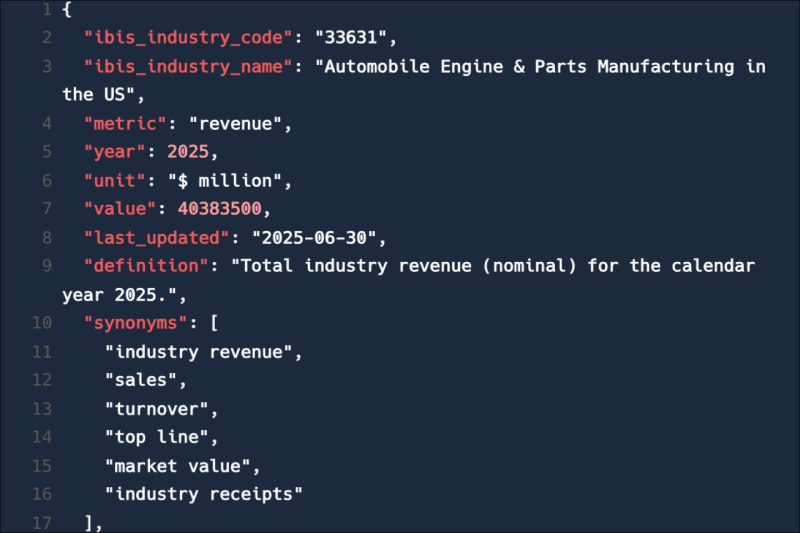
Feed trusted, human-driven industry intelligence straight into your platform.

Streamline your workflow with IBISWorld’s intelligence built into your toolkit.
IBISWorld's research coverage on the Radio Broadcasting industry in Norway includes market sizing, forecasting, data and analysis from 2015-2030. The most recent publication was released July 2025.
The Radio Broadcasting industry in Norway operates under the industry code NO-J601. Participants in this industry broadcast and transmit radio programmes to the public, affiliates or subscribers. Broadcasts are transmitted via analogue or digital signals, the internet and cable or satellite systems. However, operators in the industry do not produce, promote or distribute taped recordings of radio programmes. The industry includes the production of content for live broadcasts, but not pre-recorded broadcast content. Related terms covered in the Radio Broadcasting industry in Norway include digital broadcasting, analogue broadcasting and online broadcasting.
Products and services covered in Radio Broadcasting industry in Norway include Music Radio, Talk Radio and Sport Radio.
Companies covered in the Radio Broadcasting industry in Norway include Heinrich Bauer Verlag KG and NRJ Group SA.
The Performance chapter covers detailed analysis, datasets, detailed current performance, sources of volatility and an outlook with forecasts for the Radio Broadcasting industry in Norway.
Questions answered in this chapter include what's driving current industry performance, what influences industry volatility, how do successful businesses overcome volatility, what's driving the industry outlook. This analysis is supported with data and statistics on industry revenues, costs, profits, businesses and employees.
The Products and Markets chapter covers detailed products and service segmentation and analysis of major markets for the for the Radio Broadcasting industry in Norway.
Questions answered in this chapter include how are the industry's products and services performing, what are innovations in industry products and services, what products or services do successful businesses offer and what's influencing demand from the industry's markets. This includes data and statistics on industry revenues by product and service segmentation and major markets.
The Geographic Breakdown chapter covers detailed analysis and datasets on regional performance of the Radio Broadcasting industry in Norway.
Questions answered in this chapter include where are industry businesses located and how do businesses use location to their advantage. This includes data and statistics on industry revenues by location.
The Competitive Forces chapter covers the concentration, barriers to entry and supplier and buyer profiles in the Radio Broadcasting industry in Norway. This includes data and statistics on industry market share concentration, barriers to entry, substitute products and buyer & supplier power.
Questions answered in this chapter include what impacts the industry's market share concentration, how do successful businesses handle concentration, what challenges do potential industry entrants face, how can potential entrants overcome barriers to entry, what are substitutes for industry services, how do successful businesses compete with substitutes and what power do buyers and suppliers have over the industry and how do successful businesses manage buyer & supplier power.
The Companies chapter covers Key Takeaways, Market Share and Companies in the Radio Broadcasting industry in Norway. This includes data and analysis on companies operating in the industry that hold a market share greater than 5%.
Questions answered in this chapter include what companies have a meaningful market share and how each company is performing.
The External Environment chapter covers Key Takeaways, External Drivers, Regulation & Policy and Assistance in the Radio Broadcasting industry in Norway. This includes data and statistics on factors impacting industry revenue such as economic indicators, regulation, policy and assistance programs.
Questions answered in this chapter include what demographic and macroeconomic factors impact the industry, what regulations impact the industry, what assistance is available to this industry.
The Financial Benchmarks chapter covers Key Takeaways, Cost Structure, Financial Ratios, Valuation Multiples and Key Ratios in the Radio Broadcasting industry in Norway. This includes financial data and statistics on industry performance including key cost inputs, profitability, key financial ratios and enterprise value multiples.
Questions answered in this chapter include what trends impact industry costs and how financial ratios have changed overtime.
The Industry Data chapter includes 10 years of historical data with 5 years of forecast data covering statistics like revenue, industry value add, establishments, enterprises, employment and wages in the Radio Broadcasting industry in Norway.
More than 6,000 businesses use IBISWorld to shape local and global economies
We were able to supplement our reports with IBISWorld’s information from both a qualitative and quantitative standpoint. All of our reporting now features some level of IBISWorld integration.

IBISWorld delivers the crisp business knowledge we need to drive our business. Whether it be serving up our major clients, winning new business or educating on industry issues, IBISWorld brings real value.

IBISWorld has revolutionised business information — which has proved commercially invaluable to exporters, investors and public policy professionals in Australia and overseas.

When you’re able to speak to clients and be knowledgeable about what they do and the state that they operate in, they’re going to trust you a lot more.

The market size of the Radio Broadcasting industry in Norway is €64.0m in 2026.
There are 97 businesses in the Radio Broadcasting industry in Norway, which has declined at a CAGR of 0.6 % between 2020 and 2025.
The market size of the Radio Broadcasting industry in Norway has been declining at a CAGR of 5.0 % between 2020 and 2025.
Over the next five years, the Radio Broadcasting industry in Norway is expected to decline.
The biggest companies operating in the Radio Broadcasting industry in Norway are Heinrich Bauer Verlag KG and NRJ Group SA
Music Radio and Sport Radio are part of the Radio Broadcasting industry in Norway.
The company holding the most market share in the Radio Broadcasting industry in Norway is Heinrich Bauer Verlag KG.
The level of competition is moderate and steady in the Radio Broadcasting industry in Norway.