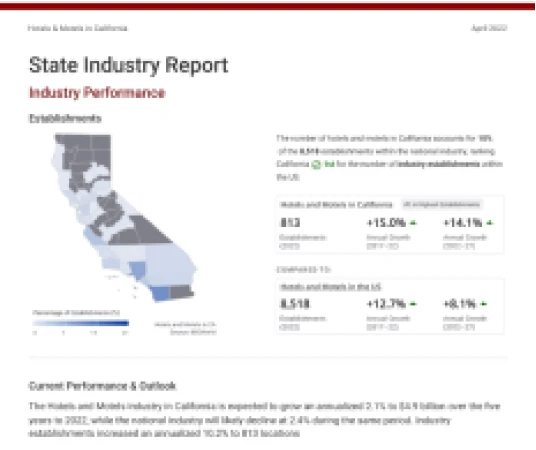

About the Nonferrous Metal Foundry Products Manufacturing in Oklahoma Market Research Report
What’s Included in the Nonferrous Metal Foundry Products Manufacturing in Oklahoma Market Research Report
Definition of the Nonferrous Metal Foundry Products Manufacturing in Oklahoma?
The Nonferrous Metal Foundry Products Manufacturing industry primarily melts and pours nonferrous metals into molds of a desired shape to make castings. The castings are made from purchased metals or in integrated secondary smelting and casting facilities. The main nonferrous metals the industry uses are aluminum, copper, magnesium, titanium and zinc.
What’s included in the Nonferrous Metal Foundry Products Manufacturing in Oklahoma?
The Nonferrous Metal Foundry Products Manufacturing in Oklahoma includes aluminum and aluminum-base alloy casting, copper and copper-base alloy casting, magnesium and magnesium-base alloy casting, zinc and zinc-base alloy casting and titanium and titanium-base alloy casting. Related terms covered in the Nonferrous Metal Foundry Products Manufacturing in Oklahoma industry report includes a metal, such as aluminum, that does not contain iron, a metal, such as steel, that contains iron, the buildings and works for casting metals, the process of pouring molten metal into a mold, waiting for it to cool and then removing it to produce a metal shape, the interval between the placing of an order and its delivery, a company that manufactures products or components that are purchased by a company and retailed under the purchasing company's brand name, a foundry that operates as a wholly owned subsidiary of a larger manufacturer and makes products exclusively for use by the parent company and a metallic substance formed from the combination of at least one metal and other chemicals.
Industry Performance of the Nonferrous Metal Foundry Products Manufacturing industry in Oklahoma
Benchmark the Nonferrous Metal Foundry Products Manufacturing in Oklahoma industry performance with all OK county and national performance.
Nonferrous Metal Foundry Products Manufacturing in Oklahoma
#43 in Highest Revenue 0% of state's GDPRevenue (2026)
Annual Growth (2021-26)
Annual Growth (2026-31)
Nonferrous Metal Foundries in the US
Revenue (2025)
Annual Growth (2020-25)
Annual Growth (2025-30)
For the full list of industry drivers, see report purchase options.
Key Drivers of the Nonferrous Metal Foundry Products Manufacturing industry in Oklahoma
See how key industry drivers, such as population, gross state product, per capita disposable income, producer price index: nonferrous metals, world price of aluminum and demand from aircraft, engine and parts manufacturing are impacting Nonferrous Metal Foundry Products Manufacturing in Oklahoma
Oklahoma Economic Indicators
Population
Gross State Product
Per Capita Disposable Income
View more economic information in OK State Economic profile
US Key External Drivers
Producer Price Index: Nonferrous metals
World price of aluminum
Demand from aircraft, engine and parts manufacturing
For the full list of industry drivers, see report purchase options.
County Data of the Nonferrous Metal Foundry Products Manufacturing industry in Oklahoma
Access proprietary data on county in the Nonferrous Metal Foundry Products Manufacturing in Oklahoma, such as Tulsa County, Oklahoma County and Muskogee County. Data includes figures on revenue, establishments, employees and wages by counties.
Key Statistics of the Nonferrous Metal Foundry Products Manufacturing industry in Oklahoma
Download 19 years of historical data and 5 years of projected performance.