Mobile Menu

Plus-Size Women's Clothing Stores in the US - Market Research Report (2016-2031)

Christian Perdomo Christian Perdomo New York, United States Last Updated: January 2026 NAICS OD4225

Revenue

$12.9bn

2026

$12.9bn

Past 5-Year Growth

Profit

$X.Xbn

Employees

208k

Businesses

55,167

Wages

$X.Xbn

Plus-Size Women's Clothing Stores in the US industry analysis

The Plus-Size Women's Clothing Stores industry has been undergoing a visible transformation, shifting from a sidelined niche to a more central part of the fashion landscape. These retailers have benefited from a growing cultural push toward body positivity and size inclusivity, with shoppers increasingly expecting fashionable, well-fitting garments rather than basic, utilitarian options. As mainstream labels expand their size ranges, dedicated plus-size stores are responding with sharper branding, more curated assortments and stronger online experiences to keep their edge and retain loyal customers. Revenue has hiked at a CAGR of 0.9% over the past five years to reach an estimated $12.9 billion in 2026, while income is projected to climb by 0.5%.

Trends and Insights

  • Plus-size fashion brands are thriving through body positivity. By embracing diverse representation and offering inclusive sizing, they’ve captured a loyal customer base seeking stylish, flattering designs, ultimately reshaping the industry's approach to diversity and inclusivity.
  • Cotton price drop benefits plus-size tops. Lower cotton costs enable retailers to offer competitive pricing and boost profit despite weak consumer demand, making cotton apparel more attractive than synthetic alternatives and driving higher sales.
  • Plus-size women's clothing aligns with the distribution of population sizes. This trend mirrors other retail sectors, emphasizing a customer-centric approach in which offerings reflect consumer demographics and cater to the diverse body sizes in the market.
  • Online retailers and discount stores increase competition. As these external challenges grow, plus-size women's clothing stores face intensified market dynamics, requiring strategic adaptations to retain and attract customers amid evolving consumer preferences and aggressive pricing strategies.
Show more

Get more expert insights that help you cut through the noise.

Get fast answers to complex questions about your business or your client’s industry. Annual memberships include unlimited access to data and analysis for thousands of industries globally.

Get in Touch

Unlock Expert Insights with Full Platform Access

  • Human Driven & Verified Analysis
  • Structured Database Powering Workflows
  • Intelligent Tools Empowering Confident Decisions
  • Insight where-and how- you need them

How you can access insights on the Plus-Size Women's Clothing Stores in the US industry

The Plus-Size Women's Clothing Stores in the US Industry Report is available in multiple formats to fit seamlessly into your workflow.

IBISWorld Platform

Answer any industry question in minutes with our entire database at your fingertips.

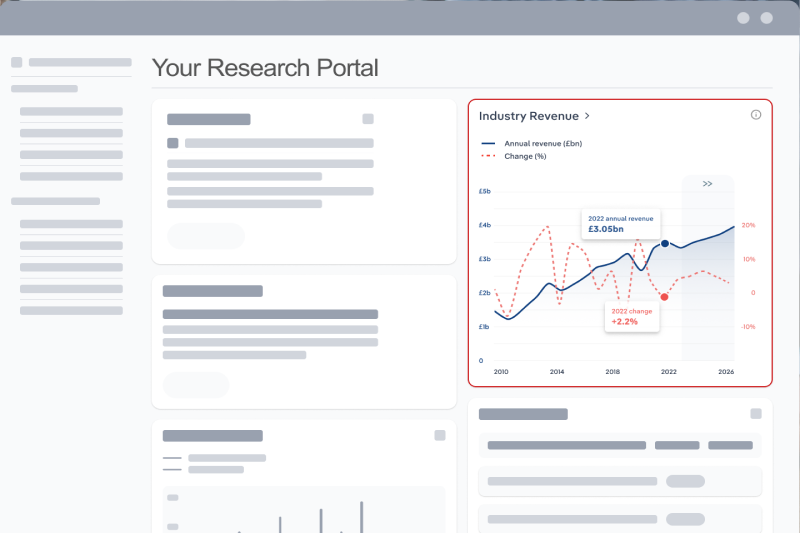
Screen of the IBISWorld platform user interface Book a demo

API Data Delivery

Feed trusted, human-driven industry intelligence straight into your platform.

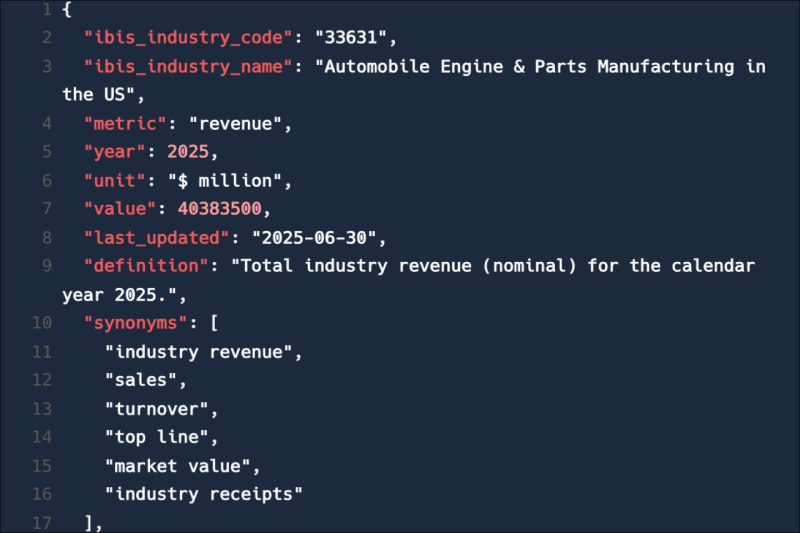
Code example of using the IBISWorld API API documentation

Integrations

Streamline your workflow with IBISWorld’s intelligence built into your toolkit.

Screen of Client Application integrating with IBISWorld data View integrations

Related Coverage

Understand the landscape with full access to an IBISWorld license

Complementors

  • There are no industries to display.

Industry Statistics and Trends

Market size and recent performance (2016-2031)

Industry revenue has grown at a CAGR of 0.9 % over the past five years, to reach an estimated $12.9bn in 2026.

Trends and Insights

Plus-size fashion brands harness body positivity to capture loyal, inclusion‑seeking shoppers

  • The body positivity movement has boosted demand for inclusive sizing in retail, driving growth in plus-size fashion. Torrid, focused on sizes 10–30, has leveraged stylish, comfortable, flattering designs and strong customer insight to become a leading plus-size brand, though its revenue trajectory has recently been uneven within a still-expanding category.
  • Additional trends and insights available with purchase
Plus-Size Women's Clothing Stores in the US
Revenue (2016-2031)
IBISWorld Logo Source: IBISWorld

Industry outlook (2026-2031)

Market size is projected to grow over the next five years.

Trends and Insights

Rising cotton prices will squeeze plus‑size apparel retailers’ profit

  • World cotton prices will climb by 5.6% in 2026 after a 9.0% drop last year, as tighter supplies and modest demand recovery lift input costs for cotton‑rich fabrics. Manufacturers of plus‑size women’s apparel, requiring more fabric and complex construction, will face higher material costs and are likely to pass increases to retailers.

Biggest companies in the Plus-Size Women's Clothing Stores in the US

Company
Market Share (%)
2026
Revenue ($m)
2026
Profit ($m)
2026
Profit Margin (%)
2026
Ascena Retail Group, Inc.
700.4
66.8
9.5
Torrid Inc.
357.8
12.3
3.4

To view the market share and analysis for all 2 top companies in this industry, view purchase options.

Products & Services Segmentation

Plus-Size Women's Clothing Stores in the US
Products & Services
IBISWorld Logo Source: IBISWorld

Industry revenue is measured across several distinct product and services lines, including Tops and blouses, Undergarments and Bottoms. Tops and blouses is the largest segment of the Plus-Size Women's Clothing Stores in the US.

Trends and Insights

Plus-size tops and blouses thrive as cotton prices drop and fashion updates soar

  • Tops and blouses range from relaxed T-shirts to polished office wear, forming essential pieces of a versatile wardrobe. Designed for plus-size women, they offer diverse fits, fabrics and styles, showcasing vibrant colors and patterns that celebrate individual taste, comfort and confidence.
  • More insights available in the full report

Table of Contents

About this industry

Industry definition

Retailers in this industry focus on plus-size women's clothing designed specifically for women who require larger sizes. Generally, sizes 14 and above are classified as plus-size; however, the exact sizing can vary between different brands and retailers.

What's included in this industry?

Products and services covered in the Plus-Size Women's Clothing Stores industry in the United States include Retailing dresses , Retailing pants, Retailing tops, Retailing undergarments and Retailing accessories .

Companies

Companies covered in the Plus-Size Women's Clothing Stores industry in the United States include Ascena Retail Group, Inc. and Torrid Inc.

Purchase this report to view all 2 major companies in this industry.

Related Terms

Related terms covered in the Plus-Size Women's Clothing Stores industry in the United States include foundation garment, obesity, overweight, plus-size clothing, brick-and-mortar, showrooming, webrooming and omnichannel retailing.

Industry Code

NAICS 2017

NAICS 448190 - Plus-Size Women's Clothing Stores in the US

Performance

Get an indication of the industry's health through historical, current and forward-looking trends in the performance indicators that make or break businesses.

Analyst insights

Plus-size fashion brands are thriving through body positivity. By embracing diverse representation and offering inclusive sizing, they’ve captured a loyal customer base seeki...

In this chapter (4)

  • Current Performance
  • Outlook
  • Volatility
  • Life Cycle

Key metrics

  • Annual Revenue, Recent Growth, Forecast, Revenue Volatility
  • Number of Employees, Recent Growth, Forecast, Employees per Business, Revenue per Employee
  • Number of Businesses, Recent Growth, Forecast, Employees per Business, Revenue per Business
  • Total Profit, Profit Margin, Profit per Business

Charts

  • Revenue, including historical (2016-2025) and forecast (2026-2031)
  • Employees, including historical (2016-2025) and forecast (2026-2031)
  • Businesses, including historical (2016-2025) and forecast (2026-2031)
  • Profit, including historical (2016-2026)
  • Industry Volatility vs. Revenue Growth
  • Industry Life Cycle

Detailed analysis

  • Trends in supply, demand and current events that are driving current industry performance
  • Expected trends, economic factors and ongoing events that drive the industry's outlook
  • Key success factors for businesses to overcome volatility
  • How contribution to GDP, industry saturation, innovation, consolidation, and technology and systems influence the industry's life cycle phase.

Products and Markets

Learn about an industry's products and services, markets and trends in international trade.

Analyst insight

Cotton price drop benefits plus-size tops. Lower cotton costs enable retailers to offer competitive pricing and boost profit despite weak consumer demand, making cotton appar...

In this chapter

  • Products & Services
  • Major Markets

Key metrics

  • Largest market segment and value in 2026
  • Product innovation level

Charts

  • Products & services segmentation in 2026
  • Major market segmentation in 2026

Detailed analysis

  • Trends impacting the recent performance of the industry's various segments
  • Innovations in the industry's product or service offering, specialization or delivery method
  • Key factors that successful businesses consider in their offerings
  • Buying segments and key trends influencing demand for industry products and services

Geographic Breakdown

Discover where business activity is most concentrated in an industry and the factors driving these trends to find opportunities and conduct regional benchmarking.

Analyst insights

Plus-size women's clothing aligns with the distribution of population sizes. This trend mirrors other retail sectors, emphasizing a customer-centric approach in which offerin...

In this chapter (1)

  • Business Locations

Charts

  • Share of revenue, establishment, wages and employment in each state
  • Share of population compared to establishments in each region in 2026

Tables

  • Number and share of establishments in each state in 2026
  • Number and share of revenue each state accounts for in 2026
  • Number and share of wages each state accounts for in 2026
  • Number and share of employees in each state in 2026

Detailed analysis

  • Geographic spread of the industry across North America, and trends associated with changes in the business landscape
  • Key success factors for businesses to use location to their advantage

Competitive Forces

Get data and insights on what's driving competition in an industry and the challenges industry operators and new entrants may face, with analysis built around Porter's Five Forces framework.

Analyst insights

Online retailers and discount stores increase competition. As these external challenges grow, plus-size women's clothing stores face intensified market dynamics, requiring st...

In this chapter (4)

  • Concentration
  • Barriers to Entry
  • Substitutes
  • Buyer & Supplier Analysis

Key metrics

  • Industry concentration level
  • Industry competition level and trend
  • Barriers to entry level and trend
  • Substitutes level and trend
  • Buyer power level and trend
  • Supplier power level and trend

Charts

  • Market share concentration among the top 4 suppliers from 2021-2026
  • Supply chain including upstream supplying industries and downstream buying industries, flow chart

Detailed analysis

  • Factors impacting the industry’s level of concentration, such as business distribution, new entrants, or merger and acquisition activity.
  • Key success factors for businesses to manage the competitive environment of the industry.
  • Challenges that potential industry entrants face such as legal, start-up costs, differentiation, labor/capital intensity and capital expenses.
  • Key success factors for potential entrants to overcome barriers to entry.
  • Competitive threats from potential substitutes for the industry’s own products and services.
  • Key success factors for how successful businesses can compete with substitutes.
  • Advantages that buyers have to keep favorable purchasing conditions.
  • Advantages that suppliers have to maintain favorable selling conditions.
  • Key success factors for how businesses can navigate buyer and supplier power.

Companies

Learn about the performance of the top companies in the industry.

Analyst insights

Ascena Retail Group faced bankruptcy in 2020. Sycamore Partners subsequently purchased them, highlighting the ongoing struggles within the plus-size women's clothing market t...

In this chapter

  • Market Share Concentration
  • Companies
  • Company Spotlights

Charts

  • Industry market share by company in 2022 through 2026
  • Major companies in the industry, including market share, revenue, profit and profit margin in 2026
  • Overview of Ascena Retail Group, Inc.'s performance by revenue, market share and profit margin from 2020 through 2026
  • Overview of Torrid Inc.'s performance by revenue, market share and profit margin from 2020 through 2026

Detailed analysis

  • Description and key data for Ascena Retail Group, Inc., and factors influencing its performance in the industry
  • Description and key data for Torrid Inc., and factors influencing its performance in the industry

External Environment

Understand the demographic, economic and regulatory factors that shape how businesses in an industry perform.   

Analyst insights

Plus-sized women’s clothing stores face moderate regulatory requirements. These include consumer protection laws and employment regulations impacting operations and complianc...

In this chapter

  • External Drivers
  • Regulation & Policy
  • Assistance

Key metrics

  • Regulation & policy level and trend
  • Assistance level and trend

Charts

  • Regulation & Policy historical data and forecast (2016-2031) 
  • Assistance historical data and forecast (2016-2031) 

Detailed analysis

  • Demographic and macroeconomic factors influencing the industry, including Regulation & Policy and Assistance
  • Major types of regulations, regulatory bodies, industry standards or specific regulations impacting requirements for industry operators
  • Key governmental and non-governmental groups or policies that may provide some relief for industry operators.

Financial Benchmarks

View average costs for industry operators and compare financial data against an industry's financial benchmarks over time. 

Analyst insights

Plus-size clothing retailers face significant increases in purchasing costs. Supply chain issues, rising material costs, and inflation are driving higher expenses, forcing th...

In this chapter

  • Cost Structure
  • Financial Ratios
  • Key Ratios

Key metrics

  • Profit margin, and how it compares to the sector-wide margin
  • Average wages, and how it compares to the sector-wide average wage
  • Largest cost component as a percentage of revenue
  • Industry average ratios for days' receivables, industry coverage and debt-to-net-worth ratio

Charts

  • Average industry operating costs as a share of revenue, including purchases, wages, depreciation, utilities, rent, other costs and profit in 2026
  • Average sector operating costs as a share of revenue, including purchases, wages, depreciation, utilities, rent, other costs and profit in 2026
  • Investment vs. share of economy

Data tables

  • Industry Multiples (2019-2024)
  • Industry Tax Structure (2019-2024)
  • Income Statement (2019-2024)
  • Balance Sheet (2019-2024)
  • Liquidity Ratios (2019-2024)
  • Coverage Ratios (2019-2024)
  • Leverage Ratios  (2019-2024)
  • Operating Ratios (2019-2024)
  • Cash Flow & Debt Service Ratios (2016-2031)
  • Revenue per Employee (2016-2031)
  • Revenue per Enterprise (2016-2031)
  • Employees per Establishment (2016-2031)
  • Employees per Enterprise (2016-2031)
  • Average Wage (2016-2031)
  • Wages/Revenue (2016-2031)
  • Establishments per Enterprise (2016-2031)
  • IVA/Revenue (2016-2031)
  • Imports/Demand (2016-2031)
  • Exports/Revenue (2016-2031)

Detailed analysis

  • Trends in the cost component for industry operators and their impact on industry costs and profitability 

Key Statistics

Industry Data

Data Tables

Including values and annual change:

  • Revenue (2016-2031)
  • IVA (2016-2031)
  • Establishments (2016-2031)
  • Enterprises (2016-2031)
  • Employment (2016-2031)
  • Exports (2016-2031)
  • Imports (2016-2031)
  • Wages (2016-2031)

Top Questions Answered

Unlock comprehensive answers and precise data upon purchase. View purchase options.

What is the market size of the Plus-Size Women's Clothing Stores industry in the United States in 2026?

The market size of the Plus-Size Women's Clothing Stores industry in the United States is $12.9bn in 2026.

How many businesses are there in the Plus-Size Women's Clothing Stores industry in the United States in 2026?

There are 55,167 businesses in the Plus-Size Women's Clothing Stores industry in the United States, which has grown at a CAGR of 15.2 % between 2021 and 2026.

How may import tariffs affect the Plus-Size Women's Clothing Stores industry in the United States?

The Plus-Size Women's Clothing Stores industry in the United States is unlikely to be materially impacted by import tariffs with imports accounting for a low share of industry revenue.

How may export tariffs affect the Plus-Size Women's Clothing Stores industry in the United States?

The Plus-Size Women's Clothing Stores industry in the United States is unlikely to be materially impacted by export tariffs with exports accounting for a low share of industry revenue.

Has the Plus-Size Women's Clothing Stores industry in the United States grown or declined over the past 5 years?

The market size of the Plus-Size Women's Clothing Stores industry in the United States has been growing at a CAGR of 0.9 % between 2021 and 2026.

What is the forecast growth of the Plus-Size Women's Clothing Stores industry in the United States over the next 5 years?

Over the next five years, the Plus-Size Women's Clothing Stores industry in the United States is expected to grow.

What are the biggest companies in the Plus-Size Women's Clothing Stores industry in the United States?

The biggest companies operating in the Plus-Size Women's Clothing Stores industry in the United States are Ascena Retail Group, Inc. and Torrid Inc.

What does the Plus-Size Women's Clothing Stores industry in the United States include?

Retailing dresses and Retailing pants are part of the Plus-Size Women's Clothing Stores industry in the United States.
Which companies have the highest market share in the Plus-Size Women's Clothing Stores industry in the United States?

The company holding the most market share in the Plus-Size Women's Clothing Stores industry in the United States is Ascena Retail Group, Inc..

How competitive is the Plus-Size Women's Clothing Stores industry in the United States?

The level of competition is high and increasing in the Plus-Size Women's Clothing Stores industry in the United States.


Methodology

How are IBISWorld reports created?

IBISWorld has been a leading provider of trusted industry research for over 50 years to the most successful companies worldwide. With offices in Australia, the United States, the United Kingdom, Germany and China, we are proud to have local teams of analysts that conduct research, data analysis and forecasting to produce data-driven industry reports.

Our analysts start with official, verified and publicly available sources of data to build the most accurate picture of each industry. Analysts then leverage their expertise and knowledge of the local markets to synthesize trends into digestible content for IBISWorld readers. Finally, each report is reviewed by one of IBISWorld’s editors, who provide quality assurance to ensure accuracy and readability.

IBISWorld relies on human-verified data and human-written analysis to compile each standard industry report. We do not use generative AI tools to write insights, although members can choose to leverage AI-based tools within the platform to generate additional analysis formats.

What data sources do IBISWorld analysts use?

Each industry report incorporates data and research from government databases, industry-specific sources, industry contacts, and our own proprietary database of statistics and analysis to provide balanced, independent and accurate insights.

Key data sources in the US include: 

  • US Census Bureau
  • US Bureau of Labor Statistics
  • US International Trade Commission

Analysts also use industry specific sources to complement catch-all sources, although their perspective may focus on a particular organization or representative body, rather than a clear overview of all industry operations. However, when balanced against other perspectives, industry-specific sources provide insights into industry trends.

These sources include:

  • Industry and trade associations
  • Industry federations or regulators
  • Major industry players annual or quarterly filings

Finally, IBISWorld’s global data scientists maintain a proprietary database of macroeconomic and demand drivers, which our analysts use to help inform industry data and trends. They also maintain a database of statistics and analysis on thousands of industries, which has been built over our more than 50-year history and offers comprehensive insights into long-term trends.

How does IBISWorld forecast its data?

IBISWorld’s analysts and data scientists use the sources above to create forecasts for our proprietary datasets and industry statistics. Depending on the dataset, they may use regression analysis, multivariate analysis, time-series analysis or exponential smoothing techniques to project future data for the industry or driver. Additionally, analysts will leverage their local knowledge of industry operating and regulatory conditions to impart their best judgment on the forecast model.

IBISWorld prides itself on being a trusted, independent source of data, with over 50 years of experience building and maintaining rich datasets and forecasting tools. We are proud to be the keystone source of industry information for thousands of companies across the world.

Learn more about our methodology and data sourcing on the Help Center.

feedback